Skip to content
Proffi

Proffi knowledge centre

Expert explanations of accounting figures, public registers, bankruptcy and choosing suppliers – with visible sources and the date of the latest review.

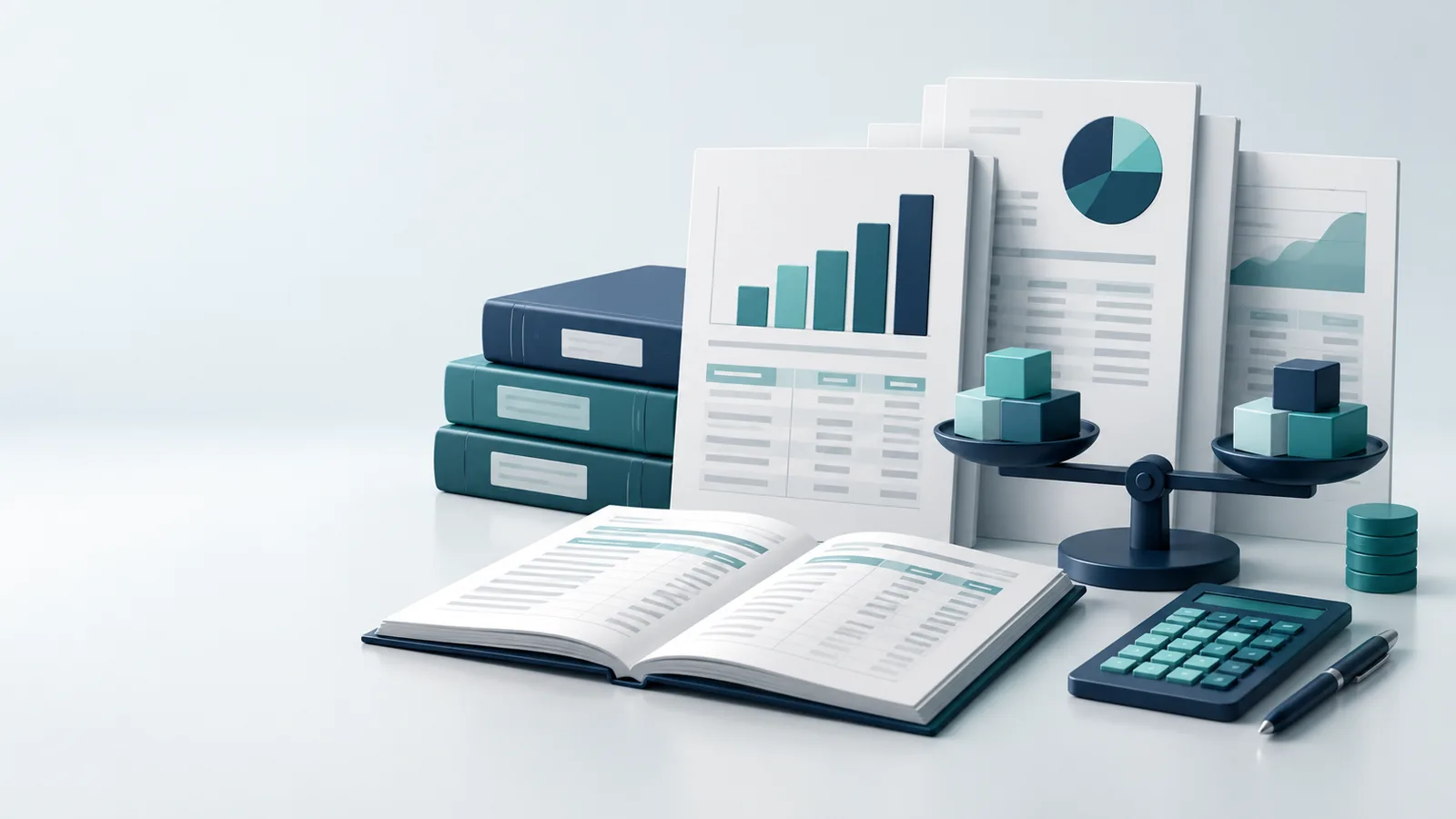
Illustration of annual accounts with profit and loss, balance sheet and financial charts

Recommended guide

Annual Accounts Explained: How to Read Financial Statements

Financial statements show how a business's economy has developed over a specific period, and what the business owns and owes on the balance sheet date. For suppliers, customers, and owners, the accounts can provide useful signals about size, profitability, financing, and solvency.

Read the guide


All articles

Ownership and Control

A-Shares and B-Shares: What's the Difference?

A- and B-shares are different classes of shares with rights stipulated in the articles of association. See differences in voting rights, dividends, and ownership.

2 min read

Accounting and Auditing

What is an Auditor's Report? How to Read It

The auditor's report expresses the auditor's conclusion on the annual financial statements. See what a standard report, qualifications, and emphasis of matter mean.

2 min read

Credit and Supplier Control

What is a Credit Score for Businesses?

See what a credit score means, what information can affect it, and how to use it when evaluating customers and suppliers.

2 min read

Employer and Employees

Minimum Wage in Norway: Who is Covered?

Norway does not have a single general minimum wage. See which industries have generally applicable rates and what employers must verify.

2 min read

Tax and Duties

Advance Tax for Businesses

See how advance tax for limited companies is determined, paid, and amended when expected profits change.

2 min read

Tax and Duties

What is a VAT Return (MVA-melding)?

All VAT-registered businesses in Norway must submit a VAT Return (MVA-melding). See what it shows, how to reconcile figures, and correct errors.

2 min read

Ownership and Control

Tax on Share Gains

Learn how gains and losses on shares are calculated for individual shareholders, and the role of acquisition cost and shielding.

2 min read

Tax and Duties

Selling Abroad and VAT

See how delivery, customer type, and the type of good or service affect Norwegian VAT when a business sells abroad.

2 min read

Invoice and Payment

What is eFaktura for businesses?

eFaktura sends invoices directly to private customers' online banking. See the difference from EHF and AvtaleGiro, and how businesses can get started.

2 min read

Employer and Employees

Obligatory Occupational Pension (OTP)

See when a business must establish OTP, who should be enrolled, minimum savings, and what an employer must do if establishment is late.

2 min read

Ownership and Control

Share Capital Increase in an AS: How an Emission Works

A share capital increase raises the registered share capital in a limited company. This can occur when existing or new owners subscribe for shares against payment or non-cash contributions, or through a bonus issue where equity is reallocated.

2 min read

Accounting and Auditing

Late Filing Fee for Annual Accounts: How it Works

When an entity subject to filing requirements fails to submit complete annual accounts by the deadline, the Register of Company Accounts (Regnskapsregisteret) may impose a late filing fee. The fee increases over time up to a maximum limit, which is adjusted with the court fee.

2 min read

Accounting and Auditing

Annual Financial Statements Deadline: What Your Company Needs to Know

Entities with a reporting obligation must submit complete annual financial statements to the Register of Company Accounts. For a standard calendar year, the deadline is normally 31 July. This deadline should not be confused with the tax return deadline, which is a different reporting obligation.

2 min read

Accounting and Auditing

Audit Requirement: Which Companies Need an Auditor?

The audit requirement means that the annual financial statements must be audited by an approved auditor. The auditor examines whether the financial statements have been prepared in accordance with the requirements and issues an independent audit report.

2 min read

Credit and Supplier Control

What is a distraint charge? Meaning for businesses

A distraint charge is a lien established through forced collection when the debtor has not paid. The Namsmannen (Bailiff/Enforcement Officer) assesses whether a lien should be placed on assets such as vehicles, equipment, or other valuables. The debtor's voluntary consent is not required.

2 min read

Management and Roles

What are Articles of Association? A Company's Fundamental Rules

The Articles of Association are a company's formal foundational rules. For a limited company (aksjeselskap - AS), they determine, among other things, the company's name, purpose, share capital, and central frameworks for how the company is to be organised.

2 min read

Company Information

What is a Company Certificate, and What Does It Document?

A company certificate is documentation from the Register of Business Enterprises that shows key registered information about an enterprise. It is often used with banks, customers, suppliers, and authorities to confirm identity and formal matters.

2 min read

Company Information

What is an Industry Code? How Companies are Classified

An industry code is a five-digit code that describes a business's main activity. The codes are based on the Standard for Industrial Classification and are used for statistics, registry data, and industry analyses, among other things.

2 min read

Credit and Supplier Control

Business Credit Check: How to Assess Risk

A credit check assesses the likelihood that a business can pay and fulfil its obligations. It is relevant before granting extended payment terms, entering a large supplier agreement, or becoming dependent on a single collaborator.

2 min read

Credit and Supplier Control

Payment Default on a Company: What Does It Mean?

A payment default is a credit information entry that may indicate a claim has progressed significantly in a formal collection process or that a serious payment event has been registered. It can affect a company's ability to obtain loans, credit, and supplier agreements.

2 min read

Bankruptcy and Risk

What is Compulsory Liquidation? Causes and Consequences

Compulsory liquidation – often referred to as compulsory dissolution – means that a company is referred to the district court for dissolution because legal requirements have not been met. The process differs from voluntary liquidation, which is

2 min read

Ownership and Control

Parent Company and Subsidiary: How a Group Works

A parent company and one or more subsidiaries form a group when the parent company has controlling influence. This influence can stem from shares, voting rights, or agreements.

2 min read

Ownership and Control

What is a Holding Company? Benefits, Structure, and Risk

A holding company is a company that primarily owns shares or interests in other companies. "Holding" describes its function, not a distinct legal corporate form. In Norway, it is often established as an AS (Aksjeselskap, a limited company).

2 min read

Accounting and Key Figures

What is Profit Margin? Formula and Interpretation

Profit margin is a profitability metric that indicates what proportion of revenue remains as profit. This key figure makes it easier to compare companies of different sizes than simply looking at the profit in Norwegian Kroner (NOK).

2 min read

Public Tenders

What is a Framework Agreement? A Guide for Suppliers

A framework agreement is an agreement between one or more contracting authorities and one or more suppliers that establishes the terms for contracts to be concluded over a specific period. Price, quality, assortment, delivery, and other conditions can be fully or partially clarified in advance.

2 min read

Ownership and Control

Shareholder vs. Beneficial Owner: What's the Difference?

A shareholder is an individual or legal entity that owns shares in a company. A beneficial owner is always a natural person who ultimately owns or controls the business. The terms can refer to the same p

2 min read

Management and Roles

Signature and Power of Attorney: Who Can Bind the Company?

When a company enters into an agreement, it is crucial to know if the person signing can bind the business. Two central concepts are signature right and prokura (power of attorney). Both can be registered, but they have different scopes.

2 min read

Management and Roles

Managing Director vs. Chair: What's the Difference?

The managing director and the chair have different roles within a limited company (AS). Simply put, the managing director leads the business day-to-day, while the board is responsible for management, control, and overall direction. The chair leads the board.

2 min read

Company Information

What is the VAT Register? How to check if a company is registered

The VAT Register is the register of businesses that are registered for Value Added Tax (VAT) in Norway. Registration status is useful when verifying a supplier, processing an invoice, or assessing whether a business appears correctly registered.

2 min read

Accounting and Key Figures

What is a Balance Sheet? Assets, Liabilities, and Equity

The balance sheet is an overview of a company's assets, liabilities, and equity on a specific date. While the income statement covers activity over a period, the balance sheet is a snapshot – often at the end of the financial year.

2 min read

Accounting and Key Figures

What Is Cash Flow? Why Money In and Out Is Crucial

Cash flow describes the money that actually enters and leaves a business over a period. While the income statement shows revenues and expenses according to accounting rules, cash flow shows what happens to the means of payment.

2 min read

Accounting and Key Figures

What is the Debt-to-Equity Ratio? How to Assess Company Financing

The debt-to-equity ratio is a key figure that shows how much debt a company has relative to its equity. The figure is used to assess financing and how vulnerable the business might be to weaker earnings or higher interest rates.

2 min read

Accounting and Key Figures

What is Operating Profit? See if the Core Business is Making Money

Operating profit indicates what a company earns or loses from its ordinary operations before financial items and tax. This makes the figure useful when you want to distinguish the core business from interest, investments, and financing.

2 min read

Accounting and Key Figures

What is the Annual Result? How to Assess a Company's Financial Performance

The annual result shows what a company is left with after incomes, expenses, financial items, and tax have been accounted for. This figure appears at the bottom of the income statement and is often referred to as the “bottom line”. A positive annual result indicates a surplus,

2 min read

Tenders and B2B Sales

Public Tenders: How to Find and Evaluate Opportunities

Public sector entities procure goods and services through tenders. For suppliers, this market can provide long-term clients, but tenders demand structure, thorough documentation, and careful reading of requirements.

2 min read

Starting and Running a Business

AS or Enkeltpersonforetak? Important Differences

The choice between an AS (Limited Company) and an Enkeltpersonforetak (Sole Proprietorship) affects liability, ownership, reporting, and social rights. There is no single right choice for everyone. Risk, capital needs, number of owners, and growth plans should guide the decision.

2 min read

Registers and Companies

What is an Organisation Number, and How Do You Check It?

The organisation number (organisasjonsnummer) is a nine-digit identifier for registered businesses and other entities. It is the key to the information stored about an entity in Brønnøysundregistrene (the Brønnøysund Register Centre).

2 min read

Accounting and Key Figures

What is Operating Margin? Formula, Example, and Interpretation

Operating margin shows what proportion of operating revenue remains as operating profit after deducting the costs of ordinary operations. This key figure makes it possible to compare the profitability of businesses of different sizes.

2 min read

Accounting and Key Figures

EBIT vs. EBITDA: What’s the difference?

EBIT and EBITDA are used to assess the profitability of ordinary operations, but they treat depreciation and amortisation differently. Therefore, they can provide different pictures of the same company.


2 min read

Procurement and Suppliers

Business Waste Management: Requirements and Supplier Selection

Effective waste management involves more than just emptying bins. Businesses must understand the types of waste they generate, sort according to current regulations, utilise appropriate solutions, and be able to document what is passed on.

3 min read

Registers and Companies

Business, Company, or Enterprise – What's the Difference?

The words 'business', 'company', 'undertaking', and 'enterprise' are often used interchangeably. In everyday language, this usually works fine, but in agreements, statistics, and public registers, the terms can describe different aspects of an operation.

3 min read

Accounting and Key Figures

What is goodwill in accounting?

Goodwill is an intangible asset that typically arises when a business acquires another business and pays more than the value of its identifiable net assets. This excess value can be linked to expected synergies,

3 min read

Accounting and Key Figures

What is liquidity? How to assess solvency

Liquidity describes a business's ability to pay bills and other obligations when they fall due. A company can be profitable on paper, but still encounter problems if its funds are tied up in inventory, unpaid invoices,

3 min read

Accounting and Key Figures

What is Turnover? How to Find and Assess Revenue

Turnover is the value of goods and services a business sells during a period. In financial statements, you will often encounter the term as sales revenue or as part of operating income. Turnover indicates activity levels and size, but it does not alone tell if a company is profitable.

3 min read

Accounting and Key Figures

What is EBITDA? Formula, Calculation, and Example

EBITDA is a key financial metric used to assess operating performance before interest, taxes, depreciation, and amortisation. The abbreviation comes from English: earnings before interest, taxes, depreciation an

3 min read

Bankruptcy and Risk

What is Bankruptcy? How a Bankruptcy Unfolds in Norway

Bankruptcy is a legal process used when an individual or business cannot meet their obligations, and the payment problems are not merely temporary. The purpose is to gain an overview of assets, ensure an orderly handling of creditors, and distribute the estate according to applicable rules.

4 min read

Talk to Proffi

From company data to new customers – we show you how

Leave your contact details and an adviser will explain how segmentation, company profiles and supplier search can support your business.

Your contact details